

Table of Contents
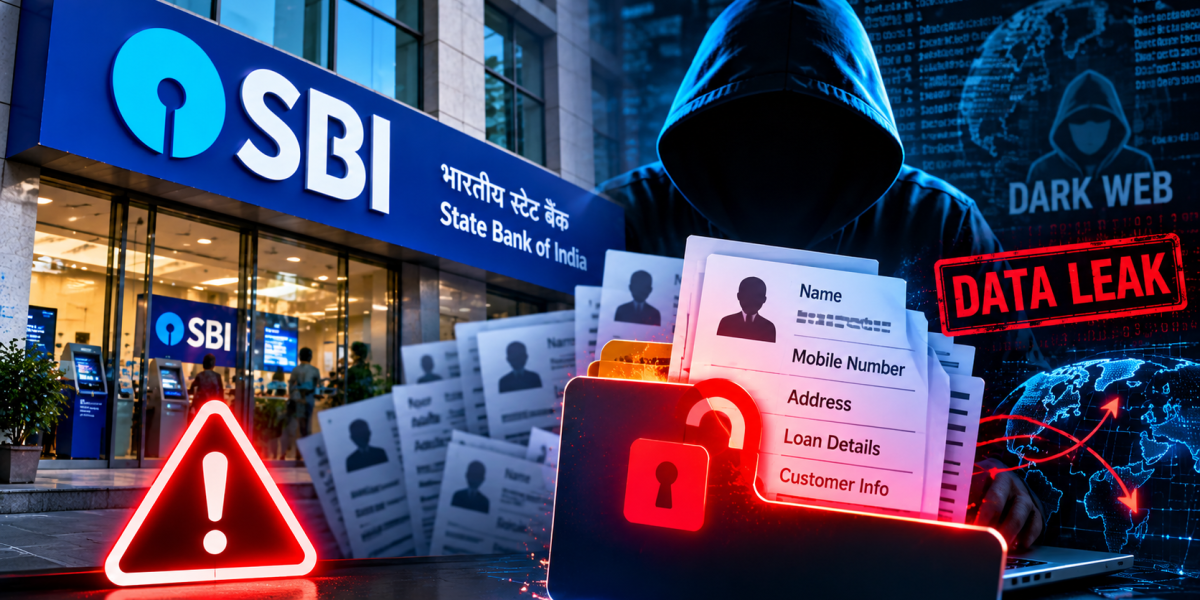
Hello friends, State Bank of India is trending on Google today because of a data leak. Many people are asking: is my account safe, and is this news even real? In this article I will explain what is confirmed, what is not, and what you should do to stay safe.
What Happened in the SBI Data Breach?
On October 16, 2026, SBI received an alert from its threat intelligence provider, the Defence Cyber Agency and CERT-In (India’s national cyber emergency response team). The alert said that SBI customer data may be exposed on the dark web.
On October 21, SBI told the stock exchanges that it had experienced “an incident involving the loss of certain data.” The bank checked about 375,000 records found on the dark web. Out of these, 3,897 records contained personal information of customers.
A hacker on a cybercrime forum claims to have 375,000 rows of data and 2,722 PDF documents, including loan applications and account opening forms. SBI has not confirmed this claim. The bank has hired an independent cybersecurity firm from CERT-In’s approved panel to find out how much of the data is genuine and where it came from.
Is This News Real or Fake?
Let me separate the facts from the rumours.
Confirmed by SBI:
- The data leak incident is real.
- 3,897 customer records with personal information were identified.
- Investigation is going on, with CERT-In and an independent security firm.
- SBI says there is no material impact on its business operations.
Not confirmed yet:
- How the data came out. SBI has not said whether its own system was hacked, or whether the data came from a subsidiary or a third-party service provider.
- Whether all 375,000 records are real.
- Whether the 3,897 records belong to 3,897 different people.
- Whether SBI will inform affected customers directly.
Fake or exaggerated (ignore these):
- “All SBI accounts are hacked.”
- “Your money will be stolen today.”
- Any WhatsApp message asking you to click a link to “check if your data leaked.”
What Data Was Leaked?
According to SBI’s filing, the exposed information includes:
- Registered mobile number
- Date of birth
- Name and gender
- Email address
- Residential address
- Branch details
- CIF number (the customer ID that the bank gives you internally)
- Lead ID and loan-related records (these are records created when someone enquires about a loan)
The filing does not list account numbers, balances, passwords, OTPs, card details, PAN or Aadhaar numbers. The hacker’s claim of loan applications and account opening forms is still unverified. Still, if you ever applied for an SBI loan or opened an account recently, stay extra careful.
Should You Worry About Your Money?
Your money is not directly at risk from this data alone. A hacker cannot take money from your account with only your name and date of birth. The real danger is fake calls and messages.
Think about it: a caller knows your name, birth date, address and branch. He says, “I am calling from SBI.” You would trust him. That is exactly how fraudsters use leaked data. Many people lose money not because the bank was hacked, but because they shared an OTP with a caller who sounded real.
What Should You Do Right Now?
- Never share OTP, PIN, CVV or password. The bank will never ask for these on a call, SMS or WhatsApp.
- Don’t trust a caller just because he knows your details. Cut the call. Open the official SBI app or website yourself, or call the number printed on your passbook or card.
- Do not click on links or install apps sent by SMS or WhatsApp. Fake “SBI KYC update” or “YONO blocked” messages often carry a harmful APK file.
- Change your net banking and YONO passwords. Use a new, strong password that you don’t use anywhere else.
- Turn on SMS and email alerts for every transaction, and check that your registered mobile number and email are correct.
- Check your bank statement for any transaction you don’t recognise.
- Check your credit report. Loan-related data is part of this leak, so someone may try to take a loan in your name. You can get one free credit report every year from each credit bureau (CIBIL, Experian, Equifax, CRIF High Mark). Look for loan enquiries that you never made.
- If your phone suddenly loses network for no reason, call your mobile operator and your bank immediately. It can be a sign of a SIM swap fraud.
If You Have Already Been Cheated
Act fast. The first few hours matter the most.
- Call the national cybercrime helpline 1930 immediately.
- Call SBI and block your card, UPI and net banking.
- File a complaint on the national cybercrime portal (cybercrime.gov.in).
- Email SBI at report.phishing@sbi.co.in.
- Take a copy of the complaint and keep screenshots of messages, call numbers and transactions.
Under RBI’s customer protection rules, reporting an unauthorised transaction to the bank within three working days generally protects you from loss. So never wait.
What Does It Mean for SBI and Investors?
SBI says there is no material impact on its operations or finances. The confirmed number of records is small compared to its huge customer base. The bigger issue is trust, because SBI holds salary, pension and government accounts of crores of people. Bank of Baroda also reported a similar cyber incident in July 2026.
If you invest in bank stocks, do not take a decision based on one news item. Wait for the investigation result and the bank’s next update.
Conclusion
The SBI data leak is real, but the scale confirmed so far is limited, and many questions are still unanswered. The best protection is simple: never share OTP, don’t trust unknown callers, and always check through the official app. I will update this article when SBI shares new information.
If you have any questions, please ask in the comment box and I will try to answer as soon as possible. Share this article with family members who use SBI, especially elders, because they are the main target of fake calls.
Disclaimer: This article is for educational and awareness purposes only. It is based on SBI’s public statement and news reports available on October 22, 2026, and details may change as the investigation continues. It is not investment or legal advice.